
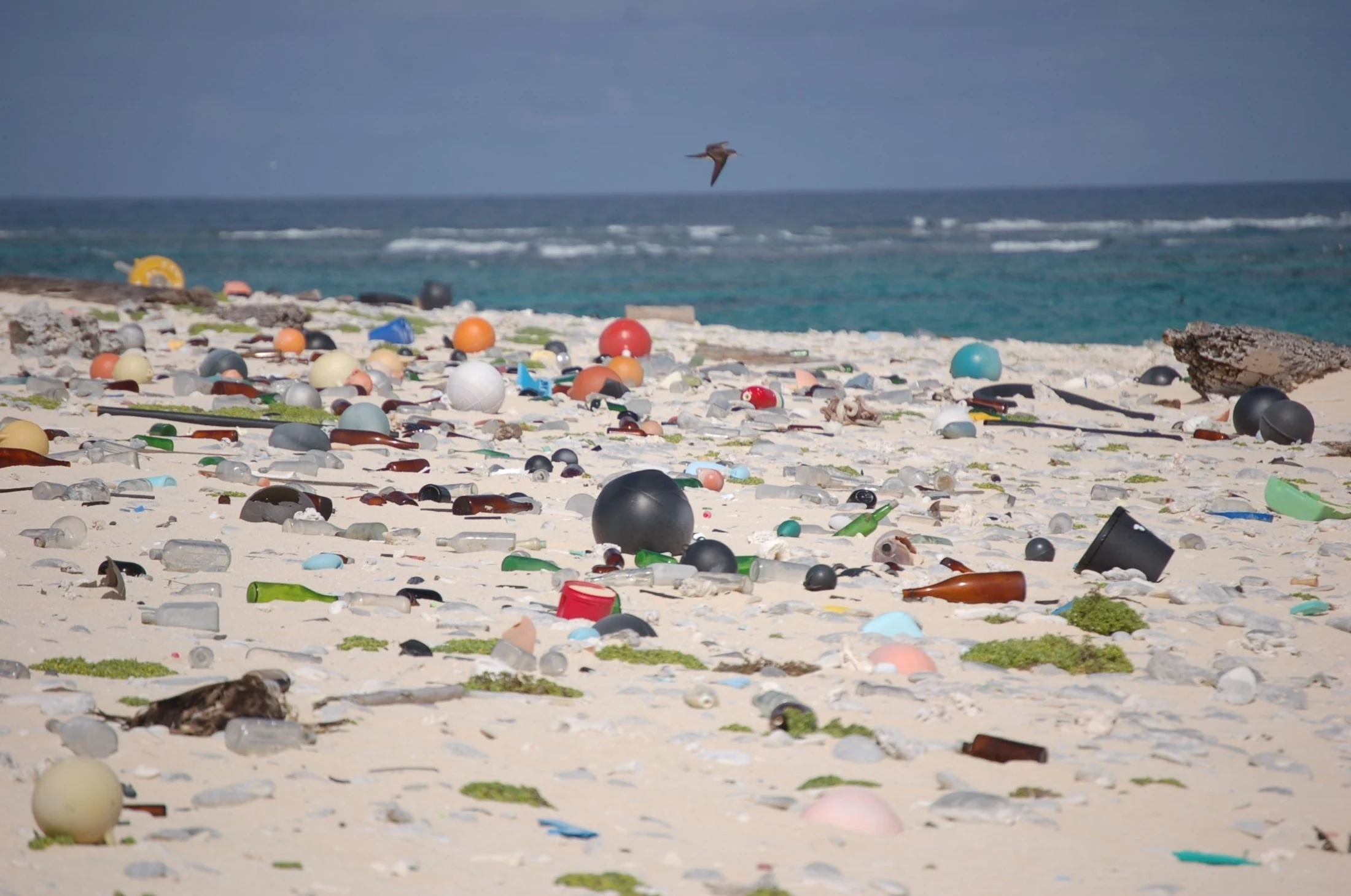
Marine debris on Laysan Island in Papahānaumokuākea Marine National Monument, photographed October 11, 2012. Historical illustrative image, not a WOL cleanup or a report of present conditions. Photo: Susan White/USFWS.
A plastic bottle is an ordinary object with an extraordinary ability to travel beyond the place where someone last used it. In results released on August 26, 2026, Ocean Conservancy reported that volunteers in its 2025 International Coastal Cleanup collected more than 1.3 million plastic bottles and nearly 886,000 caps. Those are recorded finds from participating cleanups, not a census of everything in the ocean. They are still a striking reminder that this global problem includes objects we recognize immediately.
Why a small piece matters
The concern is more than an untidy shoreline. NOAA explains that wildlife can become tangled in discarded nets, packing bands and other debris. Plastic swallowed by an animal can cause injury or block its digestive system. A bag mistaken for food and a loop caught around a flipper are different hazards, but both connect a familiar discarded object with an animal’s ability to live normally.
Plastic’s durability is part of what makes it useful. In the water, that same quality becomes a problem. NOAA describes how sunlight, salt water and waves can break plastic into smaller pieces. Fragmenting does not mean disappearing. Once those pieces are tiny, finding and removing them becomes much harder.
Nor does every item begin its journey at the beach. Weaknesses in waste collection, littering and stormwater runoff can bring material from land into waterways. Lost or discarded fishing gear is another source. The answer has to reach beyond asking beachgoers to pick up after themselves.
What a cleanup can achieve
On September 26, 2026, Ocean Conservancy reported that 439 volunteers removed 2,182 pounds of trash from Anacostia Park in Washington, D.C. Its account included bottles, caps and cigarette butts, alongside objects as different as a tire and a fishing rod. That was a documented removal at a named place. It was not a measurement of how much healthier the whole ocean had become.
There is another useful result: a record of what people find. The organizer says volunteers’ Clean Swell app entries and paper data sheets contribute to its marine debris database. Sorting and counting give a pile of collected material more meaning. They can help people ask why particular items keep appearing and where a prevention effort might begin.
For anyone joining a cleanup, the practical questions are straightforward. Who is organizing it? Which areas are appropriate to enter? Where does collected waste go? Follow the organizer’s safety instructions, leave unfamiliar or hazardous material to qualified personnel, and avoid disturbing wildlife. A good event should make those boundaries easy to understand.
Stop the next bottle, too
Removing existing litter and preventing the next load belong together. UNEP’s Beat Plastic Pollution campaign calls for eliminating unnecessary plastics, designing products for reuse or recycling, improving collection and responsibly managing what cannot be recycled. That is a wider task than making one beach look better for an afternoon.
A useful place to start is an object people use repeatedly: a drink container at work, a cup at a sports venue, or takeaway packaging at a regular event. Before launching a campaign around it, ask how it is bought, used, collected and handled afterward. A reusable option needs a workable return and washing arrangement. A recycling sign needs a collection system that actually accepts the material.
For a company team, a practical proposal could pair a locally organized cleanup with a specific change at its own workplace. Record the items collected separately from the disposable items no longer purchased. These are different achievements. Neither should be converted into an unsupported claim about animals saved or plastic removed from the open ocean.
Give attention a useful job
A public campaign can start with a simple invitation: learn what turns up on your local shore, then choose something you can change. NOAA encourages community cleanups, counting debris and using reusables. People living inland can take part too, because litter in streets and streams can become marine debris.
An athlete or public figure could introduce the people doing this work and help an organizer reach willing volunteers. A business could support an agreed equipment or transport need. These are proposed ways to contribute, not existing WOL partnerships. Confirm the organizer’s capacity, priorities and permission before promising an event, fundraiser or campaign in its name.
The most useful story continues after the group photograph. What was collected? What was learned? What changed, and who will keep it going? Ocean plastic is a large problem, but those questions give public attention somewhere practical to go.
Put the plan into practice.
Explore company participation with WOL. Scope, responsibilities and reporting would be agreed before any work begins.
Explore the corporate programFor individual participation, join the free WOL network. For an evidence framework, read A practical ocean scorecard.