
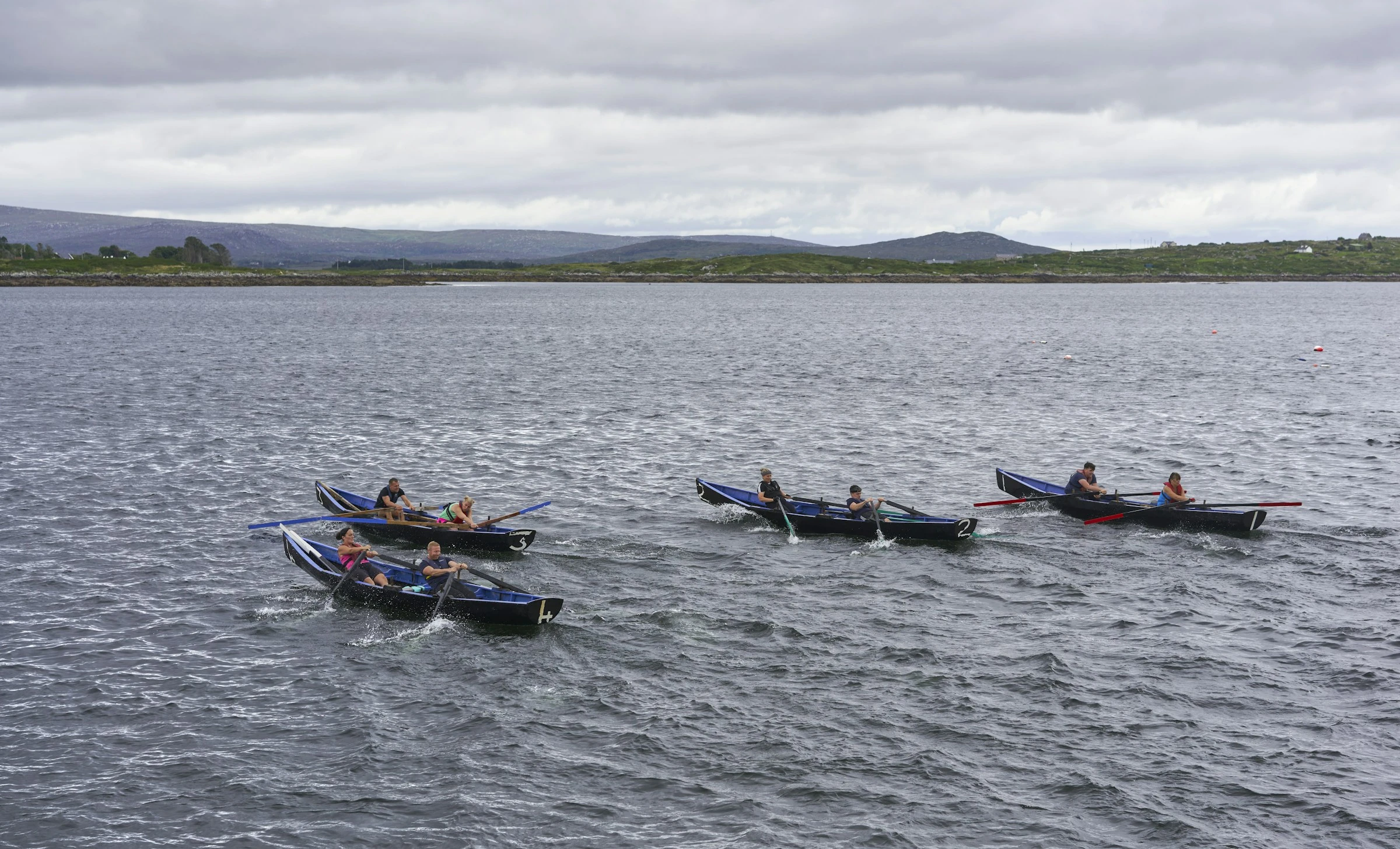
Rowing crews at the 2023 Roundstone Regatta in County Galway, Ireland. Photo: Xavier von Erlach / Unsplash. Illustrative photography; not the Long Beach cleanup, a WOL activity, or evidence of a WOL partnership. Photo: Xavier von Erlach.
Sport can make an ocean issue feel local, shared, and worth showing up for. A club or national team brings athletes, staff, partners, and supporters into one community. The opportunity is to use that convening power responsibly: begin with work a qualified organization actually needs, make participation practical, and report the result without turning one event into a larger environmental claim.
A sports connection can give the work a place
On September 19, 2026, Ocean Conservancy reported that more than 150 volunteers collected 1,109 pounds of trash at Alamitos Beach in Long Beach, California. Participants included members of Team USA Artistic Swimming, the U.S. Olympians and Paralympians Alumni Association of Southern California, and the Mayor’s Office. The cleanup was part of Ocean Conservancy’s International Coastal Cleanup and its Protect Where We Play initiative.
The location made the connection with sport easy to understand. Alamitos Beach is planned as a competition location for the 2028 Olympic and Paralympic Games. Athletes and local officials could invite attention to a shoreline connected to a future major event, while an established conservation organization managed the cleanup and reported the activity.
Those figures belong to Ocean Conservancy’s account of its event. They describe participation and material collected on one day. They do not by themselves establish a lasting change in shoreline condition, and the event had no stated WOL affiliation. The useful lesson for another sports organization is the structure: a relevant place, a capable organizer, a practical role for people, and a defined record of what happened.
Start with the organizer, not the publicity plan
A team should first identify a local conservation organization, public land manager, or established volunteer program and ask what support is useful. The answer may be a cleanup, but it could also be monitoring, restoration support, a learning session, fundraising for a confirmed need, or a smaller activity suited to the site and the organizer’s capacity.
Before inviting athletes, employees, or supporters, confirm the location, permissions, group size, supervision, equipment, accessibility, waste handling, weather plan, and response to hazardous material. A public-facing event also needs clear safeguarding and emergency arrangements. These operational details are part of the conservation program, not background administration.
The sports connection should help people understand why this place matters. A swimming organization may have a natural relationship with a beach or aquatic venue; a football or baseball club may begin with the watershed that serves its home community. The activity should follow local priorities rather than force every organization into the same format.
Use the assets of sport with intention
Sports organizations have several forms of participation to coordinate. Athletes and coaches can draw attention. Operations staff can make the day work. Commercial partners may contribute funding, equipment, or employee time. Supporters can join a public activity when the organizer has the capacity to host them. Each role should be agreed in advance rather than assembled through a broad call to action with no delivery plan.
A useful invitation explains the work, who is organizing it, what volunteers will do, what they should bring, and how access questions will be handled. Participation should remain voluntary. Permission to photograph or interview someone should be separate from registration, especially where children, community volunteers, or employees are involved.
Publicity can extend the reach of the work, but it should describe the activity accurately. Name the organizer, the place, the date, and the measured result. Avoid implying that athlete attendance proves a wider environmental benefit, that a cleanup resolves the source of local pollution, or that a participating organization has received an environmental certification.
Treat a cleanup as action and evidence
A cleanup record can include the number of participants, volunteer hours, area covered, items or material collected, and the destination for disposal. Use the method selected by the organizer and avoid combining estimates with measured totals without labeling the difference. Ocean Conservancy’s Clean Swell guidance, for example, lets a group record cleanup data under a shared name and recommends assigning a recorder rather than asking every volunteer to enter the same activity.
That record is useful, but it answers a specific question: what did the group do and collect during this activity? NOAA’s Marine Debris Monitoring and Assessment Project uses repeated, standardized shoreline surveys to examine the amount and types of debris and how conditions change over time. A one-day cleanup total and a monitoring series are different forms of evidence.
For a sports organization, the reporting discipline is straightforward. Publish the activity output that can be supported. If longer-term monitoring was not part of the work, leave the longer-term outcome unclaimed. This makes the account more credible and gives the organizer a clearer basis for recommending what should happen next.
Build a season, not just a moment
The strongest first event ends with a next decision. The team can review attendance, participant experience, the organizer’s assessment, the quality of the records, and the usefulness of the support provided. It can then repeat the activity, improve the format, fund a related need, or move into a different role recommended by the local organization.
A simple sequence works well: prepare people before the activity, complete one clearly scoped piece of work, and return with an accurate closing account. The team’s media channels can support each stage without making communications the center of the program. Over time, the story becomes a record of continued participation rather than a series of disconnected campaign days.
Two ways to begin with WOL
Individuals can join the free World Ocean League network to follow stories and future participation opportunities. A company or sports organization that wants help defining an employee, partner, or supporter program can explore WOL’s proposed 90-day corporate format: one organization, one agreed initiative, a participation plan, communications, and a closing evidence report.
The 90 days describe a management and participation period, not a promise of ecological recovery. The delivery organization, availability, permissions, costs, conservation contribution, and responsibilities must be confirmed for the specific location and activity. A practical first program gives people a useful role and gives the organization a record it can stand behind.
Put the plan into practice.
Explore a scoped 90-day corporate ocean program, with responsibilities and reporting agreed before work begins.
Explore the corporate programFor individual participation, join the free WOL network. For an evidence framework, read A practical ocean scorecard.